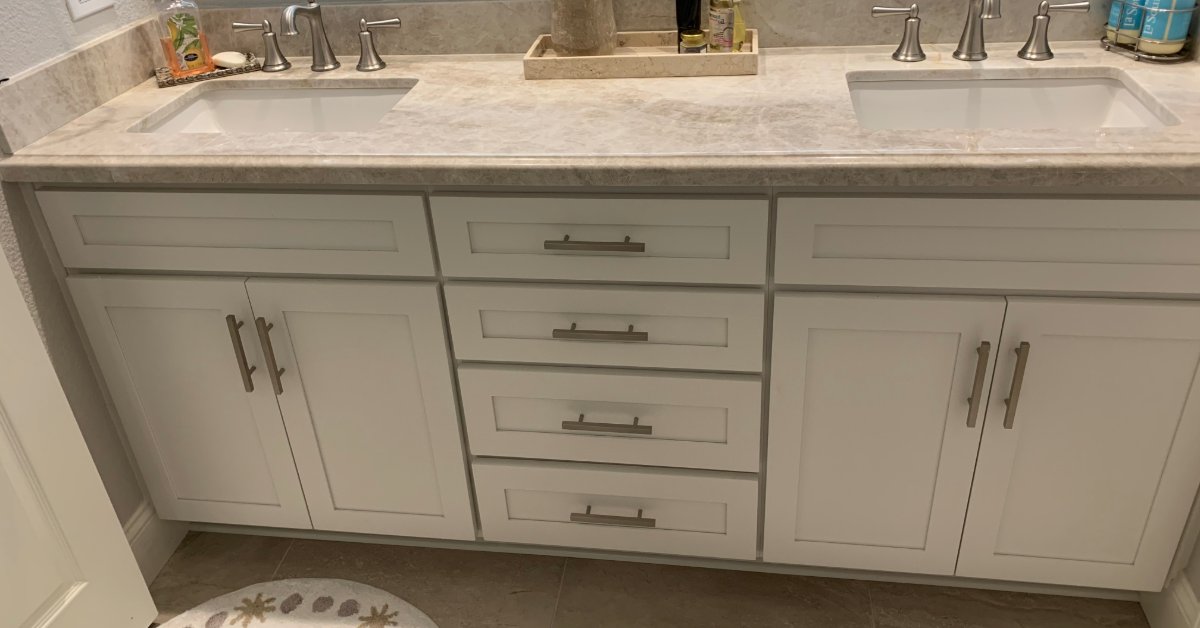
Bathroom cabinets work hard in one of the most moisture-heavy rooms in the home. Steam rises, and daily routines slowly test cabinet materials. Preventing warping in bathroom cabinets starts with understanding how moisture moves through the space. A cabinet that looks sturdy on day one needs proper construction and installation to remain aligned over time.
The Reason Bathroom Cabinets Warp in the First Place
Warping happens when cabinet materials absorb moisture unevenly. One side of a door or panel may swell before the other, pulling the surface out of alignment. Bathrooms make that problem more likely because humidity levels fluctuate throughout the day.
Heat adds another layer of stress. Warm air carries moisture, and repeated exposure to steam gives wood-based materials more opportunities to expand. Once the air dries out, those materials contract again. Over time, that cycle weakens the stability of cabinet components.
Poor sealing makes the problem worse. Moisture usually enters through unfinished edges or the underside of a cabinet box. Those areas may not stand out visually, yet they determine how well the cabinet holds up.
Choosing the Right Cabinet Materials To Prevent Warping
Solid wood brings beauty and character, but it responds to changes in moisture when it is not properly sealed or maintained. Construction quality means as much as the species of wood itself.
Plywood is commonly favored for cabinet boxes because its layered structure resists movement better than many lower-grade sheet goods. High-quality engineered materials may work well, too, when they are designed for cabinetry and protected with the right finish.
Homeowners comparing bathroom cabinets in Las Vegas should think about indoor moisture and desert dryness. The local climate may be arid, but bathrooms create their own microclimate every time someone showers. A well-built cabinet accounts for both conditions.

Protective Finishes and Sealants That Prevent Moisture Damage
A finish does more than create color or sheen. It forms a protective layer that slows moisture from entering the cabinet surface. Durable finishes are valuable in bathrooms because exposed panels handle routine humidity.
Sealants deserve close attention at vulnerable points. Joints and cutouts need stronger protection than broad flat surfaces. When those areas are left unprotected, moisture finds the easiest path into the material.
Factory-applied finishes tend to offer more consistency than rushed on-site coating. A thin spot could be the place where swelling begins. For custom or semi-custom cabinetry, asking how each surface is finished gives homeowners a clearer sense of long-term performance.
Installation Choices That Reduce Warping Risk
Installation plays a major role in how well bathroom cabinetry handles moisture over time. The right layout and protective details help reduce stress before daily use begins.
Proper Ventilation
Ventilation controls the moisture that causes cabinet movement. A bathroom fan should pull humid air out during showers and continue running long enough to clear lingering steam. Without that airflow, moisture settles onto cabinet surfaces and nearby walls.
Window use may help when outdoor conditions allow, though a dedicated exhaust fan gives more dependable control. If mirrors stay fogged for long periods, the cabinetry is likely sitting in humidity longer than ideal.
Cabinet Placement
Placement affects how cabinets come into contact with water. A vanity positioned too close to a shower opening may receive regular splashes. Repeated contact along one side could eventually change the shape of a panel.
Sink layout deserves the same attention. A cabinet near an undersized sink or crowded countertop may deal with daily drips. Better spacing gives people room to use the bathroom comfortably without sending water toward cabinet seams.
Floating vs. Floor-Mounted
Floating vanities reduce contact with floor moisture because the cabinet box sits above the surface. For bathrooms where mopping or splashing near the floor is a concern, that separation protects the lower cabinet structure.
Floor-mounted cabinets still perform well when installed correctly. The base needs proper protection where it meets the floor. The best choice depends on how water moves through the space during normal use.
Moisture Barriers
Moisture barriers protect hidden areas that rarely get attention after installation. A barrier behind or beneath a cabinet can reduce exposure from damp walls, small plumbing leaks, or condensation near the floor. Those risks stay unnoticed until damage has already started.
Barrier placement should be part of the installation conversation. A skilled cabinet team will review the room before recommending the right protection.

Daily Habits That Prevent Warping
Daily habits make a meaningful difference after installation. Wiping up water around the sink keeps moisture from sitting along seams and edges.
Running the exhaust fan during and after showers should become part of the routine. Leaving cabinet doors open briefly after exposure to heavy steam allows trapped humidity to escape.
Cleaning products deserve care, too. Harsh chemicals may break down finishes and make surfaces more vulnerable. Gentle cleaners used with a damp, not soaked, cloth preserve the protective coating.
How To Spot Early Signs of Warping
Early warning signs are usually subtle, so it helps to check how the cabinet looks and smells during regular use.
- Uneven doors: A cabinet door stops closing evenly or begins sitting slightly off-center.
- Drawer misalignment: A drawer front sticks out slightly or rubs when opened.
- Raised edges: Areas near sinks, floors, or shower-adjacent walls show swelling first.
- Finish changes: Bubbling or peeling grain points to moisture intrusion.
- Soft corners: Corners that seem weakened or slightly puffy signal water exposure.
- Musty odor: A damp smell inside the cabinet suggests a hidden leak or trapped humidity.
Small changes appear before obvious bending or swelling. Catching them early gives a professional more options for repair or adjustment.
What To Do if Your Cabinets Are Already Warping
Warping should be addressed as soon as it appears. The first step is finding the moisture source. A cabinet will not stay repaired if a leak, a ventilation problem, or a repeated splash pattern keeps adding water to the same area.
Minor alignment problems should be corrected with hinge adjustments or drawer hardware repairs. Swollen panels or failing finishes need professional evaluation. In some cases, replacing a single component preserves the rest of the vanity.
Severe warping often points to deeper material damage. A cabinetry expert could recommend rebuilding part of the cabinet or replacing it with materials better suited for bathroom use. The goal is to improve the appearance and prevent the condition from recurring.
Bathroom cabinetry should hold its shape through steamy showers and the everyday rhythm of the home. Preventing warping in bathroom cabinets starts with choices that respect how moisture moves through the room. For a bathroom that looks polished and performs beautifully over time, work with Willbanks Kitchen Design Group to create cabinetry designed for your space and the Las Vegas climate.